
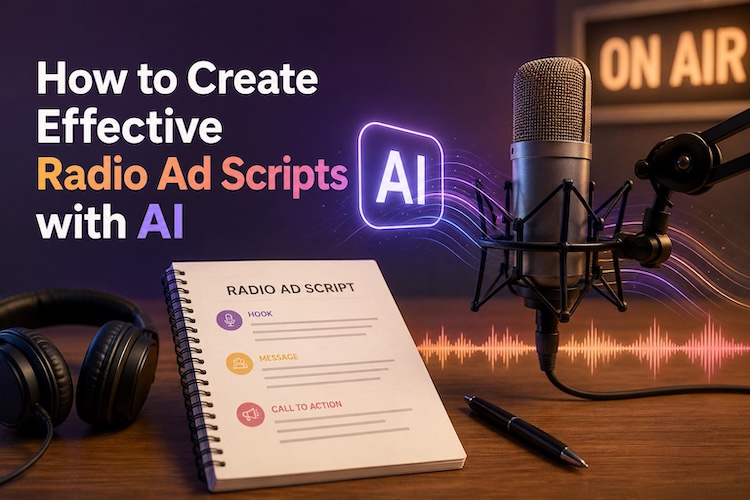
A great radio ad script captures attention, delivers a clear message, and inspires listeners to take action. Whether you're promoting a product, advertising a service, or building brand awareness, the right script can make your message more memorable. In this guide, you'll learn how to write an effective radio ad script, explore practical templates and radio ad script examples for different durations, and discover how an AI radio ad script generator like Edimakor can help you create engaging ad copy more efficiently.


What Makes a Good Radio Ad Script?
A script that actually turns listeners into customers shares a few key traits, no matter its length or format.
- Strong opening hook – the first three seconds decide whether someone tunes in or tunes out
- Clear brand message – the script delivers one product and one benefit, stated plainly
- Conversational language – the writing sounds natural when a voice actor speaks it aloud
- Emotional connection – the script taps into a problem or feeling the listener recognizes right away
- Strong call-to-action – the ad gives listeners a specific, simple next step instead of a vague "learn more"
Missing even one of these elements causes a spot to blend into background noise. When a script nails all five, even a short radio commercial script template can outperform a longer, unfocused ad.
What to Consider Before Writing a Radio Ad Script
There are a couple of practical considerations you need to consider before you even hit 'start writing'.
1. Define Your Advertising Goal
Start by deciding what you actually want the ad to accomplish.
- Do you want to raise awareness?
- Drive customers into your store?
- Or maybe showcase a special, short-lived deal?
All these questions will help you construct your ad copy and write your call-to-action.
2. Choose Your Radio Ad Format
Radio ads generally fall into a few common formats:
- Sponsorship tags – short brand mentions during a show segment
- Promotional spots – standard product or offer-focused ads
- Testimonial clips – real or scripted customer voices building trust
- Jingle-based ads – music-driven spots built around a memorable hook
3. Identify Your Target Audience
Finding the age of your audience, where they are, and how they listen will determine the level and style of the tone that you're using in the script. A script for an ad for daily commuters will sound a little bit different from one for late night listeners, so know who is listening!
4. Set Your Ad Length
Most radio slots come in lengths of 15, 30, or 60 seconds and will affect how many words you can write. A 30-second radio ad script you might have created for promotion usually comes out between 65–75 words, read in a natural, talking voice and a 60-second radio ad script will give you space for between 130 and 150 words.
How to Write a Radio Ad Script Step by Step
Writing an effective radio ad script involves more than promoting a product. You need to capture attention, communicate a clear benefit, and give listeners a reason to act. Follow these steps to turn your advertising idea into a script ready for recording.
- Step 1: Define Your Main Message
- Step 2: Write an Attention-Grabbing Hook
- Step 3: Highlight One Key Benefit
- Step 4: Add Supporting Audio Cues
- Step 5: End with a Clear Call to Action
- Step 6: Review and Time Your Script
Start by identifying the primary goal of your ad, such as promoting a new product, announcing a special offer, or increasing local awareness. Choose one key message to keep the script focused and easy to remember.
Open with a question, a relatable problem, or an interesting scenario that connects with your target audience. For example, a coffee shop might start with, "Need a better start to your morning?" A relevant opening helps listeners understand why they should keep listening.
Explain how your product or service addresses the audience's needs. Focus on a specific benefit rather than listing too many features. Use simple, conversational language that sounds natural when spoken aloud.
Use music, sound effects, or brief dialogue to establish the scene and reinforce your message. For example, the sound of coffee brewing can help create a café atmosphere. Keep audio cues purposeful so they support the message without distracting from it.
Tell listeners exactly what to do next, whether that's visiting a store, calling a number, or checking a website. If your ad promotes a special offer, make sure the offer and any relevant conditions are clear.
Read the script aloud at a natural speaking pace. Check that the message is easy to follow, the wording sounds conversational, and the call to action is clear. Include pauses, music, and sound effects when estimating the total runtime, then revise the script to fit the available airtime.
How to Generate a Radio Ad Script with AI Step by Step
Writing from a blank page is the slowest part of this whole process. HitPaw Edimakor AI Script Generator bypasses this bottleneck and turns a simple prompt into a structured script ready to go.
Here's exactly how to generate radio ad scripts with AI using Edimakor as your AI radio ad script generator.
Step 1: Install and Open Edimakor
Download and launch HitPaw Edimakor on your computer. You won't need any separate script-writing software, since Edimakor handles both the script writing and the production of your final ad in one place.
Step 2: Access AI Script Generator
Open the Toolbox, select Text, and then click AI Copywriting. This section houses Edimakor's AI ad script generator, which you can use to produce marketing copy.

Step 3: Write an AI Prompt
Just type in a clear instruction for what you'd like your ad to say. Here's a brief instruction on how you could go about that.
"Write a 30-second radio ad script for a local coffee shop for a morning commute audience, tone of voice: upbeat and friendly, mention new seasonal drink and ask people to visit their cafe this week."
Step 4: Review and Generate the Radio Ad
Once Edimakor produces an entire script from your prompt, complete with a hook, main point, and call-to-action, you can simply run through the words yourself and then refine any sentence or phrase that feels weird to say.
This walkthrough only covers the basics of script generation. If you want a full guide on turning your finished script into a produced radio ad, complete with voiceover and sound design, read this detailed guide on how to make a radio ad.
How to Format a Radio Ad Script
A well-formatted radio ad script helps voice actors, producers, and editors understand what to say and when to play each sound. A common approach is to use a two-column layout, separating speaker or audio cues from the spoken dialogue and production directions.
Key Elements of a Radio Ad Script
- Speaker Labels: Identify who is speaking, such as a narrator, announcer, or customer.
- Dialogue: Write the exact words each speaker should say in clear, conversational language.
- Sound Effects (SFX): Mark sounds that help establish a scene, such as a door opening or coffee brewing.
- Music Cues: Indicate when background music should begin, fade, or stop.
- Timing and Pauses: Add brief directions when pauses or audio transitions are important to the delivery.
Radio Ad Script Format Example
The following example shows how a simple 15-second café promotion can be organized for production.
| Speaker / Audio Cue | Dialogue / Direction |
|---|---|
| SFX | Coffee brews and pours into a cup. |
| ANNOUNCER | Need a better start to your morning? |
| MUSIC | Light, upbeat music fades in. |
| ANNOUNCER | Visit Sunrise Café for freshly brewed coffee and your favorite morning treats. |
| ANNOUNCER | Stop by today and find your new favorite. |
| MUSIC | Music fades out. |
Radio Ad Script Examples for Different Ad Formats
Radio ad scripts vary depending on the available airtime, advertising goal, and storytelling approach. The following examples show how to structure short promotions, product ads, storytelling spots, and testimonial-style commercials.
15-Second Short Promotion Radio Ad
A 15-second radio ad works best when you need to deliver one simple message quickly, such as promoting a limited-time offer or reminding listeners about a local business.
Example 1: “Craving something sweet? Sunrise Bakery serves fresh, warm donuts every morning. Stop by today and treat yourself!"
- Hook: Opens with a relatable craving.
- Key Benefit: Highlights freshly made donuts.
- CTA: Encourages listeners to visit the bakery.
Example 2: “Rainy weekend ahead? Cozy Reads has 20% off select paperbacks. Visit our downtown store before we close at 8 PM!”
- Hook: Connects the offer to a familiar situation.
- Key Benefit: Communicates a specific discount.
- CTA: Directs listeners to the store and provides a closing time.
30-Second Product Promotion Radio Ad
A 30-second radio ad gives you more room to introduce a problem, explain a key benefit, and present an offer or next step.
Example 1: "Sick of slow Wi-Fi interrupting your movie night? FiberFast delivers reliable speeds for smoother streaming. Switch this month and get your first two months free. Visit FiberFast dot com today to learn more."
- Hook: Highlights the frustration of slow Wi-Fi.
- Key Benefit: Connects the service with smoother streaming.
- Offer: Introduces a limited promotional incentive.
- CTA: Directs listeners to the website.
Example 2: "Need an oil change but short on time? QuickLube Express makes routine car maintenance convenient, with no appointment needed. Find a nearby location and get your next oil change taken care of with less hassle.
- Hook: Addresses a common problem for busy drivers.
- Key Benefit: Emphasizes convenience.
- CTA: Encourages listeners to find a location.
60-Second Storytelling Radio Ad
A 60-second radio ad can develop a more detailed narrative, helping listeners connect emotionally with a brand or community.
Example 1: Maria's Corner Coffee Shop
[SFX: Coffee brewing and cups clinking softly.]
"Last year, Maria thought she might have to close her little coffee shop. Business was slow, and the future looked uncertain. Then something wonderful happened. One neighbor stopped by for a morning coffee. Another brought a friend. Soon, the shop was filled with familiar faces and friendly conversations. Today, Maria's Corner is more than a coffee shop. It's where neighbors meet, stories are shared, and the community comes together. This weekend, stop by Maria's Corner, enjoy your favorite coffee, and support a local business that brings people together."
[MUSIC: Warm instrumental music fades out.]
- Opening: Introduces a challenge that creates curiosity.
- Story: Shows how community support makes a difference.
- Emotional Connection: Positions the café as a place where people connect.
- CTA: Invites listeners to visit and support the business.
Testimonial-Style Radio Ad
Testimonial-style ads use a first-person perspective to make a product or service feel more relatable. Any real customer statements or performance claims should be verified before publication.
Example 1: SafeHome Insurance
CUSTOMER: "I used to spend hours comparing insurance plans and still wasn't sure which one was right for me. SafeHome made it easier to understand my options, and their team answered my questions clearly. I felt much more confident choosing a plan that fit my needs."
ANNOUNCER: "Looking for insurance options that are easier to understand? Contact SafeHome to learn more about available plans."
- Personal Experience: Presents a relatable customer concern.
- Key Benefit: Emphasizes clear information and support.
- CTA: Encourages listeners to learn more.
These examples are starting points rather than finished recordings. Read each script aloud, adjust the wording to fit the intended duration, and verify all offers, product claims, and testimonial details before using an ad in a real campaign.
FAQs about Creating Radio Ad Script
A1: Yes, the AI Copywriting tool of HitPaw Edimakor can create an entire radio ad script that includes hook, message and CTA from a single text prompt.
A2: Include your product or service, target audience, advertising goal, desired tone, key selling points, and call to action. Specifying the ad length, such as 15 or 30 seconds, can also help guide the script.
A3: A radio ad script typically includes speaker labels, spoken dialogue, sound effects (SFX), music cues, and timing notes. A two-column layout can separate audio cues from dialogue, making the script easier to follow during production.
Conclusion
An effective script for an ad on the radio always comes down to two components: a clear hook and an explicit call to action, delivered in language that sounds natural when spoken aloud.
HitPaw Edimakor would handle the most strenuous part for you by generating a well-crafted script, and would let you achieve final production in voiceovers. Just try it today, and you may finally obtain the well-composed ad script in minutes.
Leave a Comment
Create your review for HitPaw articles