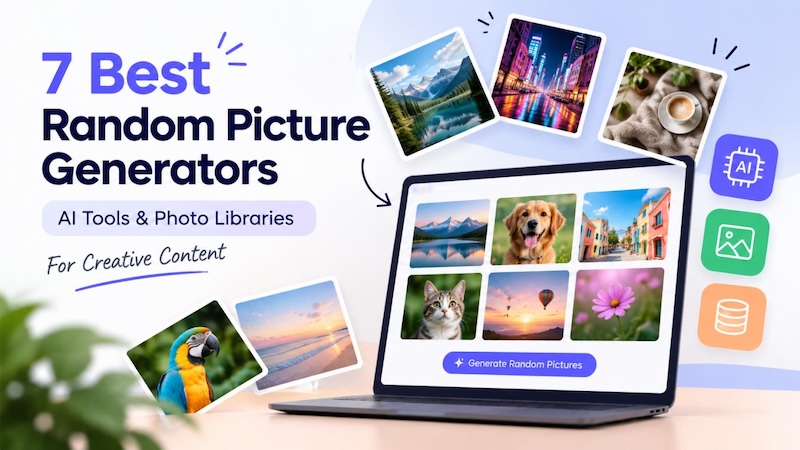
Staring at a blank content calendar with nothing to post? A random picture generator can pull you out of that rut in seconds — whether you need a quick visual for a mood board or a fresh batch of images for a blog post.
Some tools pull from massive photo libraries; others create entirely new pictures with AI. This guide breaks down 7 options worth bookmarking, from full-featured AI art platforms to simple libraries, so you can match the tool to the job at hand.
What Is a Random Picture Generator?
Right now there are two main types of tools on the market.
- The first pulls from an existing photo library — think stock sites that serve up an image at random with one click, which is exactly how a random image picker tends to work.
- The second, a random ai image generator, builds something new from scratch using text prompts or randomized inputs.
Photo libraries suit anyone who needs ready-to-use random stock photos for a blog post or presentation. A random image generator ai tool suits people chasing something nobody else will have. Knowing which type you want saves time before you even open a tool.
Top 7 Random Picture Generators to Try in 2026
1. HitPaw Edimakor
For anyone making content for Instagram, TikTok, or YouTube, HitPaw Edimakor stands out as the best random pictures generator for social creators. It pairs an random image generator ai engine with editing tools built specifically for short-form video and social posts, so the output doesn't just sit in a folder.
Key Features
- Multiple Visual Results: Generate several image options from one prompt, so you're never stuck picking a single result.
- Explore Different Styles: Switch between realistic, anime, painterly, and other looks without restarting your prompt.
- Easy Customization: Adjust color, composition, and detail level right after generation, no separate editor needed.
- Create Social-Ready Visuals: Export in square, vertical, or widescreen formats sized for Instagram, TikTok, and YouTube.
- Keep Creating in One Place : Move from image generation straight into video editing without switching platforms or exporting files.


How to Generate Random Pictures with Edimakor
Step 1: Start With a Theme (Prompt)
Open Edimakor’s AI Image tool and browse the available templates to find a style or idea you like.

If you already have a specific idea in mind, click Text to Image to create a picture from your own prompt. You don't need a fully detailed prompt; the tool fills in gaps and still returns varied, usable results with “prompt generator” option.
Step 2: Generate Multiple Results
Instead of one image, Edimakor returns several variations at once, each with a slightly different style or composition. Scroll through the batch and compare options side by side before committing to any single version. You just need to choose the output quantity.
Step 3: Save & Polish Your Favorite
The generated image is saved in the ‘My Creations’ folder. You can then use an image editing tool or add filters, stickers and more to fine-tune the photo.
2. Dreamina
Dreamina is ByteDance's random ai image generator, built for fast text-to-image creation with a clean interface and a broad style range, popular with casual creators wanting a random picture generator online with minimal setup.
Pros
- Fast generation, most images render in under a minute
- Wide style library covering anime, photoreal, and illustration presets
- Free tier available with no upfront payment required
Cons
- Limited free credits cap how much you can generate per day
- Fewer editing tools compared to full creative suites
3. Perchance
Perchance is a free, browser-based random images generator built by hobbyists, offering simple community-made generators anyone can use or remix without creating an account.
Pros
- Completely free, no signup required to start generating
- Huge variety of community-built generators for niche themes
- Lightweight and fast, even on older devices or browsers
Cons
- Inconsistent image quality since underlying models vary by generator
- Ads and occasional downtime affect the overall experience
- Limited customization compared to dedicated AI platforms
4. PicLumen
PicLumen is an ai image generator aimed at artists, offering several model styles and a straightforward free random picture generator experience for concept work and quick sketches.
Pros
- Several built-in models tuned for different art styles
- Generous free plan for casual, non-commercial use
- Clean interface that's easy for beginners to navigate
Cons
- Commercial licensing requires a paid subscription tier
- Output resolution is capped on the free plan
5. Canva
Canva blends a random stock photos library with a built-in AI generator, making it a flexible pick for anyone already designing inside the platform.
Pros
- Combines stock photos and AI generation in one workspace
- Easy to drop images straight into templates and designs
- Team collaboration features suit agencies and marketing groups
Cons
- Full AI features sit behind the Pro subscription
- Generation quality trails dedicated AI art platforms
6. Random Picture Generator
As the name suggests, Random Picture Generator isn't an random ai image generator — it's a picture random generator in the truest sense: a photo library that serves up an existing stock image with a single click.
Pros
- Instant results, one click returns a usable photo
- No account or prompt writing needed at all
- Handy for quick mood boards or placeholder visuals
Cons
- No control over subject, style, or composition
- Image variety is limited compared to major stock sites
7. Unsplash
Unsplash works as a random image generator online in the sense that its library and shuffle features surface high-quality free photography from real photographers.
Pros
- Massive library of professionally shot, high-resolution photos
- Free for commercial and personal use under its license
- Powerful search alongside random and shuffle browsing options
Cons
- No AI generation, so images are never truly original
- Popular photos get reused across many websites
Common Uses for Random Picture Generators
- Creative Inspiration for Artists: A random prompt or photo can break creative blocks faster than staring at a blank canvas.
- Social Media Content Ideas: Quick visuals fill content calendars when you're short on time or a photographer.
- Visual References for Designers: Random results offer color palettes, compositions, and lighting ideas to build from.
- Build Characters and Scenes: Writers and game designers use AI-generated faces and settings to visualize concepts.
- Fresh Ideas for Marketers: Random visuals help teams test which imagery style resonates before committing to a full shoot.
FAQs
A1: HitPaw Edimakor is the strongest pick for social content since it generates multiple image options and lets you export directly in platform-ready formats.
A2: Yes. Perchance, PicLumen, and Unsplash all offer free access, though free tiers usually come with usage limits or fewer style options.
A3: Mostly. A random image generator ai tool still needs some input, even a single word or blank prompt, but the output varies enough each time to feel genuinely random.
A4: It depends on the tool. Check each platform's license before publishing — Unsplash and Canva's stock library are generally safe, while some AI outputs require a paid plan for commercial rights.
A5: Tools like HitPaw Edimakor let you generate an image and move straight into video editing, animating or building a short clip around it without exporting to another app.
Conclusion
Photo libraries like Unsplash suit quick, realistic needs, while AI tools offer more original results. For creators who want both generation and editing in one place, HitPaw Edimakor remains the best random pictures generator on this list. Try Edimakor today and turn a random prompt into your next finished post.
Leave a Comment
Create your review for HitPaw articles