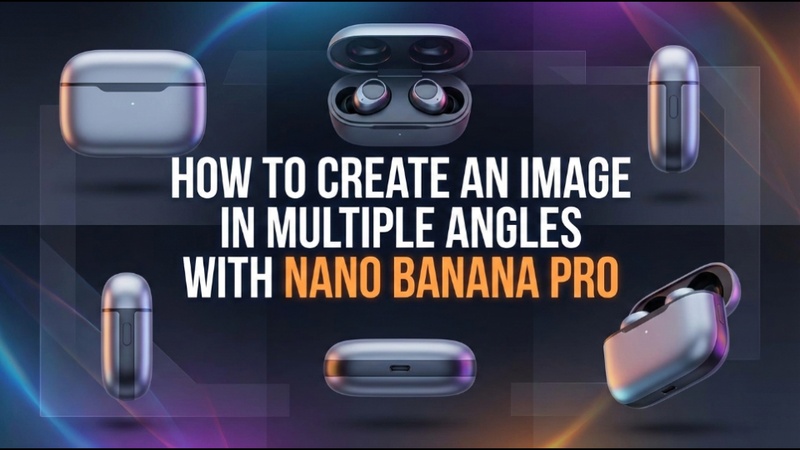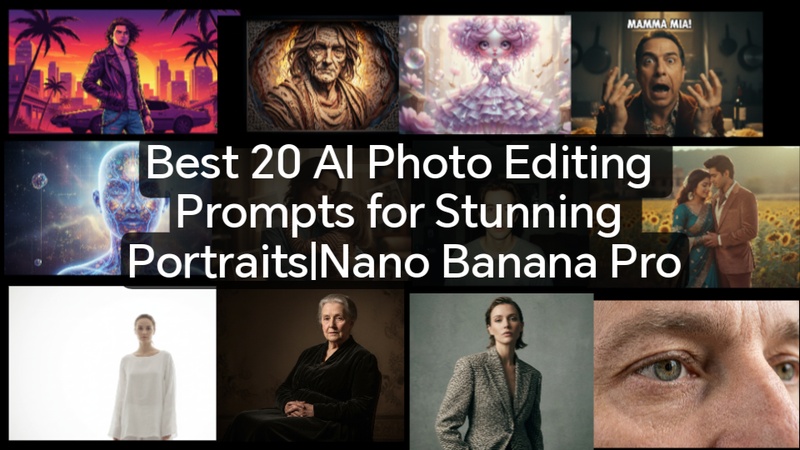

Nano Banana 2 and Nano Banana Pro are trending AI image models. This guide explains their differences, features, limits, and how to use them.
Part 1: What Is Google's Nano Banana 2 and Nano Banana Pro
Google's Nano Banana models are among the most notable examples of the increasing capabilities of AI image-generating techniques. An improved version of the previous Nano Banana model is called Nano Banana 2.
Nano Banana Pro is a more sophisticated AI image model designed for better results. It contains stronger character consistency across several photos, enhanced text correctness within images, higher resolution creation, and improved reasoning.
Part 2: Differences between Nano Banana 2 vs. Nano Banana Pro
Below is a clear comparison between Nano Banana 2 and Nano Banana Pro based on important technical and creative features.
| Feature | Nano Banana 2 | Nano Banana Pro |
|---|---|---|
| Feature | Speed priority, high efficiency, multimodal fusion | Quality First, Ultra-High Definition, Artistic Creation |
| AI Model | Based on the latest Gemini 3 Flash architecture | Focus on high-performance image generation architecture |
| Detail | Basic details | Better fine details |
| Resolution | 1024*1024 or 1536*1024 | 2K + 4K upscale |
| Consistency | Good | More consistent |
| Pricing | Mostly free with limits | AI Plus, Pro, and Ultra subscribers only |
| Speed | Extremely fast (images appear within seconds) | Slower (due to its focus on detailed rendering, it takes a bit longer). |
Part 3: Key Features of Nano Banana Pro Google Image Model
Nano Banana Pro introduces several powerful upgrades that make it a strong choice for designers, marketers, and content creators.
1 High-Quality Product Image Creation
With just a prompt, Nano Banana Pro can produce high-quality product photos. Users can ask the AI to create a clear e-commerce image with a white background, appropriate lighting, and realistic shadows, for instance, by uploading a picture of a product.
2 Improved Text Rendering
In the past, AI image models frequently had trouble producing understandable text within images. This is further enhanced with Nano Banana Pro. Now, the model can produce readable text for infographics, banners, and posters.
3 Native 2K and 4K Resolution
Higher image resolution is one of Nano Banana Pro's most significant enhancements. The model can produce native 2K images and upscale them to 4K quality without the need for basic upscaling.
4 Better Logical Understanding
Better thinking skills are introduced by Nano Banana Pro. This indicates that it can comprehend prompts involving numerous instructions, scene logic, and physical rules. For instance, Nano Banana Pro can produce more realistic results than previous models when a request calls for intricate scenarios or object interactions.
5 Faster Image Generation
Nano Banana Pro is designed for speedier performance, even though its output is of greater quality. Because it processes suggestions fast, it facilitates innovators' ability to try out many concepts and produce several iterations.
6 Stronger Scene Consistency
Nano Banana Pro enhances image consistency. The AI maintains the identity, lighting, and structure of the same character or item as you create many photos of it. Storytelling, comic book production, animation ideas, and brand visual design all benefit greatly from this capability.
Part 4: Nano Banana 2 vs Nano Banana Pro: Which One to Pick
Choosing between Nano Banana 2 and Nano Banana Pro depends on your specific needs. Below are some common scenarios that help decide which model is the better option.
1 Social Media Content
Nano Banana 2 is ideal if you mostly make images for Instagram posts, blog thumbnails, or brief social media updates. It responds well to basic cues and produces graphics fast. Nano Banana 2 provides a seamless and effective experience for novices or casual designers who require quick results without concentrating too much on ultra-high quality.
2 Professional Marketing Graphics
Image quality becomes crucial when making commercials, advertising banners, or product marketing graphics. Because it offers superior detail accuracy and higher resolution output, Nano Banana Pro is a preferable choice in this situation. Professional design projects can benefit from the model's improved handling of lighting, shadows, and texturing.
3 Comic or Storyboard Creation
Characters must be consistent throughout several scenes in projects like storyboards, comic books, and visual storytelling. Because it retains a deeper sense of character identification and scene continuity, Nano Banana Pro does better in this situation.
4 Quick Idea Prototyping
In order to swiftly test creative ideas, creators may simply require rough concept images. Nano Banana 2 is frequently a superior option in this situation. It responds well to basic cues and produces graphics more quickly. Before beginning the final production, designers, bloggers, and content producers can swiftly test out several visual concepts.
5 Print-Quality Design
Image resolution is crucial for tasks like posters, banners, presentations, and commercial design materials. Because it offers better quality outputs like 2K and 4K production, Nano Banana Pro is advised. This guarantees that the finished photos are crisp and detailed, even when printed in large sizes.
Part 5: How to Access Free Nano Banana 2 and Nano Banana Pro
Many creators think advanced AI image tools require expensive subscriptions. However, both Nano Banana 2 and Nano Banana Pro can actually be accessed for free through different platforms.
Access Through Edimakor
One of the easiest ways to use Nano Banana 2 and Nano Banana Pro is through Edimakor. Inside Edimakor’s AI tools section, you can generate images and visuals using the Nano Banana models without needing a complicated setup.
Access Through Gemini
Another way to use Nano Banana 2 and Nano Banana Pro is through Gemini. Gemini provides access to different AI tools, including advanced image generation models. Simply open Gemini, type your prompt, and ask it to generate an image using Nano Banana models. The system will process your request and create visuals based on your description.
Part 6: How to Make AI Images with Nano Banana 2 and Pro
Creating AI images with Nano Banana 2 and Nano Banana Pro inside Edimakor is simple and beginner-friendly. Follow the steps below to start creating your own AI visuals.
Step 1: Open Edimakor and Create a New Project
First, launch Edimakor on your computer. Once the program opens, you will see the main dashboard with different tools and editing options. Click on Create New Project to start a fresh workspace.



Step 2: Open AI Image Generator and Select the Model
Next, look at the left-side menu panel where all AI tools are listed. From this menu, choose the AI Image Tool to access the image generation features. Inside this section, you will see two main options: Reference Image and Text to Image.
After selecting the tool, choose the AI model you want to use. In the model list, you will find both Nano Banana 2 and Nano Banana Pro.
Step 3: Upload the Image
If you are using the reference image option, you can upload images to guide the AI generation process. Edimakor allows you to upload between 1 and 14 images as references.
Step 4: Write Prompt and Adjust Settings
You can type your own prompt describing the image you want to create. If you are unsure what to write, Edimakor also provides a Prompt Generator. You can simply enter a basic idea or upload an image, and the tool will automatically generate a detailed prompt for you.
Once the prompt is ready, adjust the generation settings. You can choose the resolution, aspect ratio, and output quantity based on your needs.
After completing all the settings, click the Generate button. The AI will process your request and create the images.
Step 5: Access the Output
When the image generation process finishes, the results will appear inside the My Creations section. If you want to locate the image on your computer, click the folder icon located at the top right corner of the image preview.
Step 6: Perform More Editing
Edimakor also allows additional editing options for your generated images. Simply right-click on the image to access more tools. From the menu, you can choose actions such as Re-edit, Regenerate, Convert to Video, Enhance Image, or Face Swap.
Part 7: How to Find Trending AI Effects of Nano Banana Pro
Edimakor regularly updates its Nano Banana Pro library with new and trending AI effects. By exploring this section, you can quickly find creative templates to transform your photos into viral AI-style images.
Step 1: Open Edimakor and Access Image Effects
Launch HitPaw Edimakor on your computer. From the main interface, go to the Image Effects section to explore the AI effect templates library.
Step 2: Search Effects in the Nano Banana Pro Section
Inside Image Effects, scroll or use the search bar to find the Nano Banana Pro section. This area contains trending and creative AI effect templates you can apply to your photos.
Step 3: Choose the Effect
Browse the available templates and select the effect you like. Click on the effect to open the creation panel.
Step 4: Upload Your Photo and Generate the Image
Upload the photo you want to transform. Review the auto-generated prompt, then click Generate. Once the AI finishes processing, go to the My Creations section to preview and access the output image, and export it to your device.
To Sum Up
Although they are both strong AI image models, Nano Banana 2 and Nano Banana Pro are made for distinct kinds of users. Because Nano Banana 2 emphasises simplicity and speed, while for enhanced reasoning, better text rendering, higher resolutions, and greater visual consistency, Nano Banana Pro advances AI image generation. Using these sophisticated models, tools like HitPaw Edimakor (Video Editor) make it even simpler to create, modify, and improve AI images.
Leave a Comment
Create your review for HitPaw articles